Addressing Healthcare Disparities with Localized Production
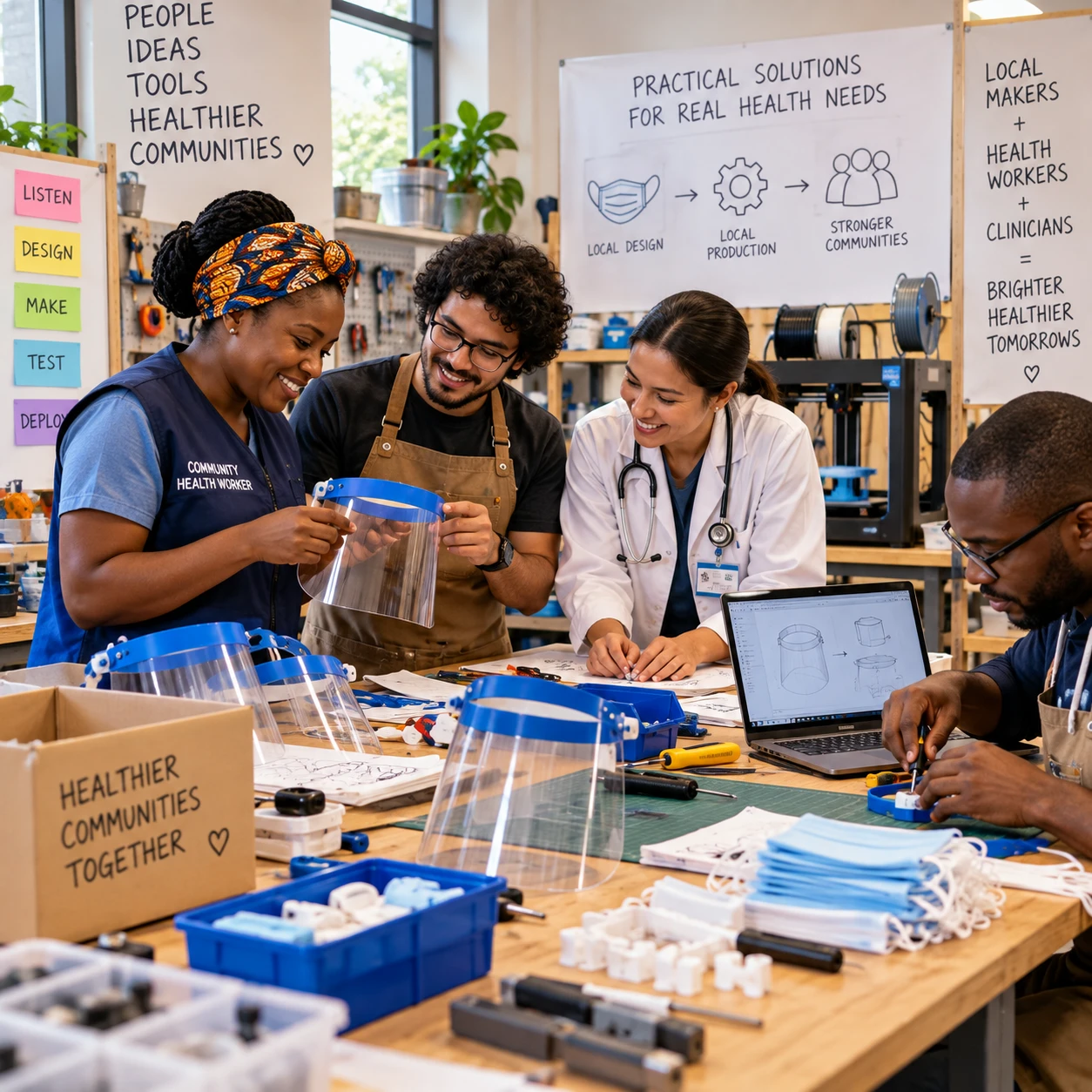
A clinic can have skilled staff and a willing patient, yet still be unable to provide care because a basic supply is missing, delayed, or unaffordable. These gaps reflect healthcare disparities shaped by geography, income, infrastructure, and the design of supply systems. Localized production may help communities respond, but it works best when it is built around local priorities, safety, and fair access.
What localized production means in healthcare
Localized production in healthcare means making or assembling selected health-related goods closer to the people and services that use them. It differs from simply buying a product from a nearby distributor: local production involves some part of the manufacturing, customization, repair, or finishing process within the region.
The model can range from a small workshop adapting mobility aids to a regulated facility producing essential supplies. Point-of-care manufacturing brings production even closer to clinical settings, such as making a fitted assistive device near the point where a patient is assessed. The right approach depends on the product, local skills, demand, and the quality controls required.
Proximity alone does not make a product equitable or affordable. A locally made item may still be priced out of reach, produced in insufficient quantities, or inaccessible to people with disabilities. Localized production is better understood as one tool within a broader community health strategy, alongside reliable procurement, trained healthcare workers, and accessible services.
How production models can affect access and equity
Localized production can support health equity by shortening some supply routes, making products easier to adapt, and giving communities a stronger role in defining what they need. Its effect depends on whether those changes reach people who face the greatest barriers to care.
When a commonly used item is hard to obtain, producing or assembling it regionally may reduce dependence on long or fragile supply chains. Local producers may also respond more quickly to changing demand or customize certain goods for language, climate, culture, body size, or the needs of a particular clinic. These pathways can strengthen supply chain resilience, especially when local capacity complements rather than replaces dependable wider suppliers.
There are limits. Small production runs can cost more per item, and local facilities may lack materials, equipment, or specialist staff. If a project serves only well-connected clinics, it can reinforce the same geographic and income gaps it aims to address. Social innovators should ask not only, “Can we make this here?” but also, “Who will receive it, who will pay, and who has a voice in the decision?”
Community-led innovation can improve that fit. Residents and frontline health workers can identify overlooked needs, test prototypes, and flag barriers that a centralized design team might miss. Their involvement should carry real decision-making power, not end after a consultation meeting.
What communities could produce locally
Communities may be able to produce or adapt selected low-risk healthcare goods locally, while products requiring specialized manufacturing or stringent controls generally need regulated facilities. Product suitability depends on safety risk, technical complexity, and the ability to verify quality consistently.
Potentially suitable categories, depending on local law and production capacity, include:
- Assistive devices: certain mobility aids, adaptive utensils, or device components that can be safely fitted, repaired, or customized with professional input.
- Basic non-sterile supplies: selected reusable or non-invasive items, provided materials, cleaning requirements, and intended use are properly assessed.
- Health education materials: locally designed information in relevant languages and formats, including large-print or visual resources.
- Repair and maintenance: servicing equipment or fabricating approved replacement parts where technicians have the right training and specifications.
These examples are not a blanket approval to manufacture any particular item. Medicines, vaccines, sterile products, diagnostic tests, and many electrical or implantable devices can carry high risks and require specialized facilities, validated processes, and regulatory oversight. Even a seemingly simple product may be unsafe if its material, fit, sterilization, or labeling is wrong.
A practical starting filter is to assess three questions: What harm could failure cause? Can local producers meet documented specifications? Can an independent or qualified quality process verify each batch or device? If the answers are uncertain, partnering with an established manufacturer or focusing first on repair, distribution, or user-informed design may be safer.
The conditions for safe, effective production
Safe localized production requires appropriate regulation, repeatable quality assurance, skilled workers, reliable infrastructure, and a plan to keep products affordable. A nearby workshop cannot replace these conditions.
Regulatory standards vary by country and product category. Before production begins, teams should identify which health authority rules apply, whether registration or licensing is required, and what documentation must accompany the product. The World Health Organization’s guidance on [medical device regulation](https://www.who.int/health-topics/medical-devices) can help frame why oversight and lifecycle management matter; local authorities remain the source for binding requirements.
Quality assurance should be designed into the process rather than added after a problem appears. That may include approved material specifications, equipment maintenance, staff training, documented production steps, inspection, traceability, and a clear way to report and investigate defects. For devices used in clinical care, clinicians and technical experts should help define performance and usability requirements.
Infrastructure matters too. Reliable power, clean workspaces where needed, access to validated materials, and safe storage can determine whether a product can be made consistently. Workforce development should include practical skills and supervision, with fair pay and realistic maintenance plans. Finally, affordability needs an explicit model: who funds setup, covers ongoing costs, and prevents the product from becoming available only to patients who can pay out of pocket?
Building a community-centered production model
A community-centered production model starts with a need identified by affected people and then tests whether local production is a safe, sustainable response. Residents, health providers, producers, and public institutions each contribute different knowledge and authority.
A useful sequence for social innovators is:
- Listen and map the gap. Work with patients, caregivers, disability groups, community health workers, and clinics to identify what is unavailable, for whom, and why.
- Compare responses. Consider local production alongside better procurement, repair services, pooled purchasing, or improved distribution. Choose the least complex option that can meet the need safely.
- Co-design and test. Develop prototypes with intended users and clinicians. Test fit, usability, cultural acceptability, and performance before scaling.
- Set roles and safeguards. Agree on ownership, quality responsibilities, regulatory approval, pricing, maintenance, and what happens if a batch fails.
- Build durable partnerships. Public-private partnerships can connect local producers with health systems, universities, funders, and regulators. Contracts should specify quality and equitable access, not just volume.
Local institutions can help anchor a project, but community participation should shape its goals and measures. A pilot is not successful simply because it makes a product; it should show that the intended users can obtain and use it safely. Partnerships also need an honest exit or continuity plan so services do not disappear when grant funding ends.
Measuring impact and avoiding unintended harm
Evaluate localized production by tracking access, reliability, safety, affordability, and who benefits—not by counting only the products made. Baseline measures and regular feedback help teams distinguish genuine progress from activity.
Useful measures include stockout frequency and delivery time; the share of intended patients who can obtain the item; out-of-pocket cost compared with alternatives; user-reported fit and usability; product failures or adverse events; and the distribution of benefits across locations and income groups. Disaggregate results where appropriate, while protecting personal information. A shorter delivery route is valuable, but it does not prove that disparities have narrowed.
Watch for three common risks. First, producing before confirming demand can leave communities with unused inventory; validate need with clinics and residents. Second, scaling faster than quality systems can weaken oversight; expand only when training, traceability, and inspection keep pace. Third, favoring places with existing capacity can direct investment toward communities already better served; use transparent criteria and consider shared regional facilities or support for underserved areas.
Localized production is most useful when it strengthens a wider system of equitable care. Community voice, dependable standards, and evidence of who gains access should guide each decision. The goal is not local manufacturing for its own sake; it is a more responsive and resilient way to meet health needs safely.
Frequently asked questions
What does localized production mean in healthcare?
It means producing, assembling, adapting, or repairing selected healthcare goods closer to the communities or services that use them. The term covers a range of models, from assistive-device workshops to regulated regional manufacturing.
Can local production reduce healthcare disparities?
It can help address specific barriers, such as delays, poor product fit, or limited availability, but it cannot guarantee health equity. Results depend on affordability, safety, distribution, and whether underserved groups influence decisions and receive the benefits.
Which healthcare products are suitable for local production?
Some assistive devices, repairs, educational materials, and selected low-risk supplies may be appropriate when local teams can meet relevant standards. High-risk or technically complex products need specialized manufacturing and regulatory review.
How can locally produced medical products meet safety standards?
Teams should confirm applicable regulations with the relevant health authority, use documented specifications and trained staff, maintain traceability, and inspect products through qualified quality systems. Requirements vary by product and location, so local production should never bypass regulatory oversight.