Digital Fabrication Labs as Hubs for Social Change
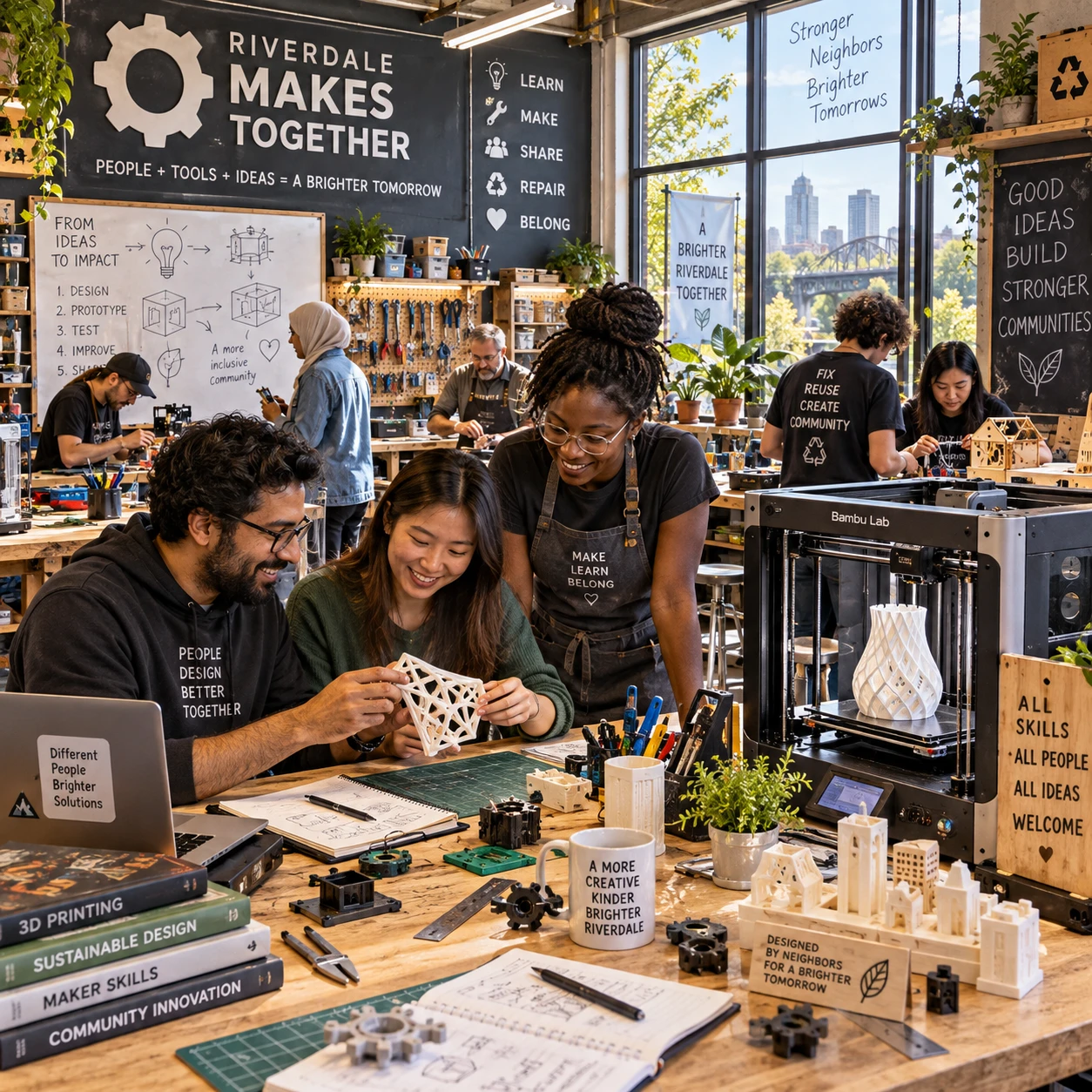
A digital fabrication lab can help a community turn local ideas into practical prototypes, shared skills, and stronger networks. Its social value, however, comes from who shapes the work and what needs it serves—not simply from having advanced equipment in the room.
What digital fabrication labs do
A digital fabrication lab gives people access to tools, knowledge, and collaborative space to design and make physical objects. By connecting digital design with hands-on production, it helps participants move from an idea to a prototype they can test and improve.
Common digital fabrication tools include 3D printers, laser cutters, vinyl cutters, and computer-controlled milling machines. A lab may also provide hand tools, repair equipment, computers, and materials. The mix depends on local goals, available funding, staff expertise, and the people expected to use it.
A conventional makerspace often centers on making, tinkering, or personal projects. A social innovation lab can use similar tools but organize activity around community-defined challenges, such as improving access to services or adapting everyday objects for local use. The distinction is about purpose and decision-making, not a strict equipment list. Many spaces combine both models.
Shared knowledge matters as much as machines. Participants can exchange design files, document what worked, and learn from one another. Open-source hardware and openly shared plans can make useful designs easier to adapt, although users still need to check safety, licensing, materials, and suitability for their context.
From making things to addressing community needs
Fabrication supports social change when projects begin with a need identified by the people affected by it. The lab can then help residents test possible responses at a manageable scale, rather than assuming that a new device or prototype will solve a deeper structural problem.
Projects might include a low-cost assistive device adapted to a person’s daily routine, tactile maps for a public building, replacement parts for community equipment, or signs and wayfinding elements created with neighborhood groups. A garden collective might prototype tool holders for shared beds; a local repair group could make a hard-to-find part while documenting the measurements and steps for others.
These examples are starting points, not universal templates. A project that works in one neighborhood may fail elsewhere because of different languages, building conditions, budgets, maintenance capacity, or cultural expectations. Begin with questions such as: Who experiences the problem? What have they already tried? What would count as a useful improvement?
Local problem-solving also means knowing when fabrication is the wrong response. A prototype cannot replace accessible public services, safe housing, or adequate funding. It may still help people communicate a need, test a small change, or make a temporary adaptation while broader advocacy continues.
Designing with communities, not just for them
Participatory design brings the people affected by a project into its planning, making, and evaluation. In a community-led design process, residents help set priorities and judge whether a result is genuinely useful, instead of being treated only as clients or testers.
That changes how a lab works. Before choosing a tool or drawing a design, facilitators can hold listening sessions, map how a challenge affects daily life, and agree on what the project can and cannot address. Participants should help decide the budget, materials, safety requirements, and ownership of the final design.
Local knowledge may reveal details a technical team misses: a device needs to be cleaned often, a sign must work for people with low vision, or a part should be repairable with tools already available nearby. Building and testing together makes those insights visible early, when changes are easier and cheaper.
Shared decision-making takes time and can surface disagreement. Make that work explicit: set a clear process for resolving competing priorities, pay community contributors when possible, and record who can approve changes. Without these safeguards, participation can become consultation in name only, with residents providing ideas but holding little influence.
Making access and inclusion part of the lab
A lab is accessible when people can realistically enter, participate, and influence its work. Equitable access depends on costs, location, schedules, communication, physical design, training, and leadership—not simply on opening the door to the public.
Membership fees, transport, childcare, tool costs, and unpaid project time can all exclude potential participants. Labs can respond with free or sliding-scale sessions, transit support, flexible hours, translated materials, and lending arrangements. These choices require funding and staff time, so they should be planned as part of the operating budget rather than added only when problems appear.
Welcoming spaces also need accessible workstations, clear safety instructions, adjustable equipment where feasible, and alternatives for people who cannot use a particular tool. Beginners benefit from short, hands-on introductions before they are expected to operate machines independently. No single training format will suit everyone; offer demonstrations, written guides, and one-to-one support.
Representation in leadership and project choices is just as important as attendance. Ask who proposes projects, who controls resources, and whose ideas are routinely deferred. A lab should review these patterns with participants and change its outreach or governance when the same groups remain absent from decisions.
Building skills and lasting capacity
Hands-on fabrication can build digital literacy, practical confidence, and the ability to work through problems with others. When participants learn by designing, making, testing, and revising, they gain experience they can use in future projects—not only a finished object.
A useful learning path moves from safe tool use to simple design, then to a project connected to a real need. For example, a beginner might learn to measure an object, create a basic digital model, print a test piece, and compare the result with the original requirements. The important lesson is the full process, including what failed and why.
Labs can strengthen that learning by pairing newcomers with experienced makers, documenting designs in plain language, and encouraging participants to teach a skill they have just learned. This builds a local pool of knowledge and reduces reliance on one specialist who may leave or become unavailable.
Equipment access alone does not guarantee lasting capacity. Machines require maintenance, consumables cost money, and software or design workflows can create barriers. A smaller tool set with reliable instruction and a maintenance plan may serve a community better than a larger collection that few people can use confidently.
What it takes to create social impact
A socially impactful fabrication lab needs clear community priorities, trusted partnerships, responsible tool use, and a plan for what happens after a prototype is made. Ongoing learning and local ownership matter more than the number of projects completed.
Partnerships with libraries, schools, disability organizations, community groups, universities, or local services can bring different expertise and reach. Agree on responsibilities early: who recruits participants, pays for materials, supervises tools, maintains equipment, and supports the project after a pilot ends. A partnership without clear ownership can leave useful work stranded.
Use an outcome check that looks beyond production. A lab can ask:
- Relevance: Did people affected by the issue choose or shape the project?
- Usability: Can intended users safely use and maintain the result?
- Learning: Did participants gain skills or confidence they can apply again?
- Continuity: Is there a person, group, or partner responsible for next steps?
Responsible practice also includes testing for safety, protecting participants’ privacy, and being honest about a prototype’s limits. A one-off object may be useful, but it is not evidence of lasting change by itself. Document decisions and feedback, revisit the project with users, and be prepared to revise or stop it if it does not meet their priorities.
There is no single lab model every community needs. Start with local goals, available relationships, and the capacity to support participants over time. When people have real influence over the work, a fabrication lab can become a durable place to learn, collaborate, and pursue community-led solutions.