How 3D Printing Education Is Building More Resilient Communities From the Ground Up
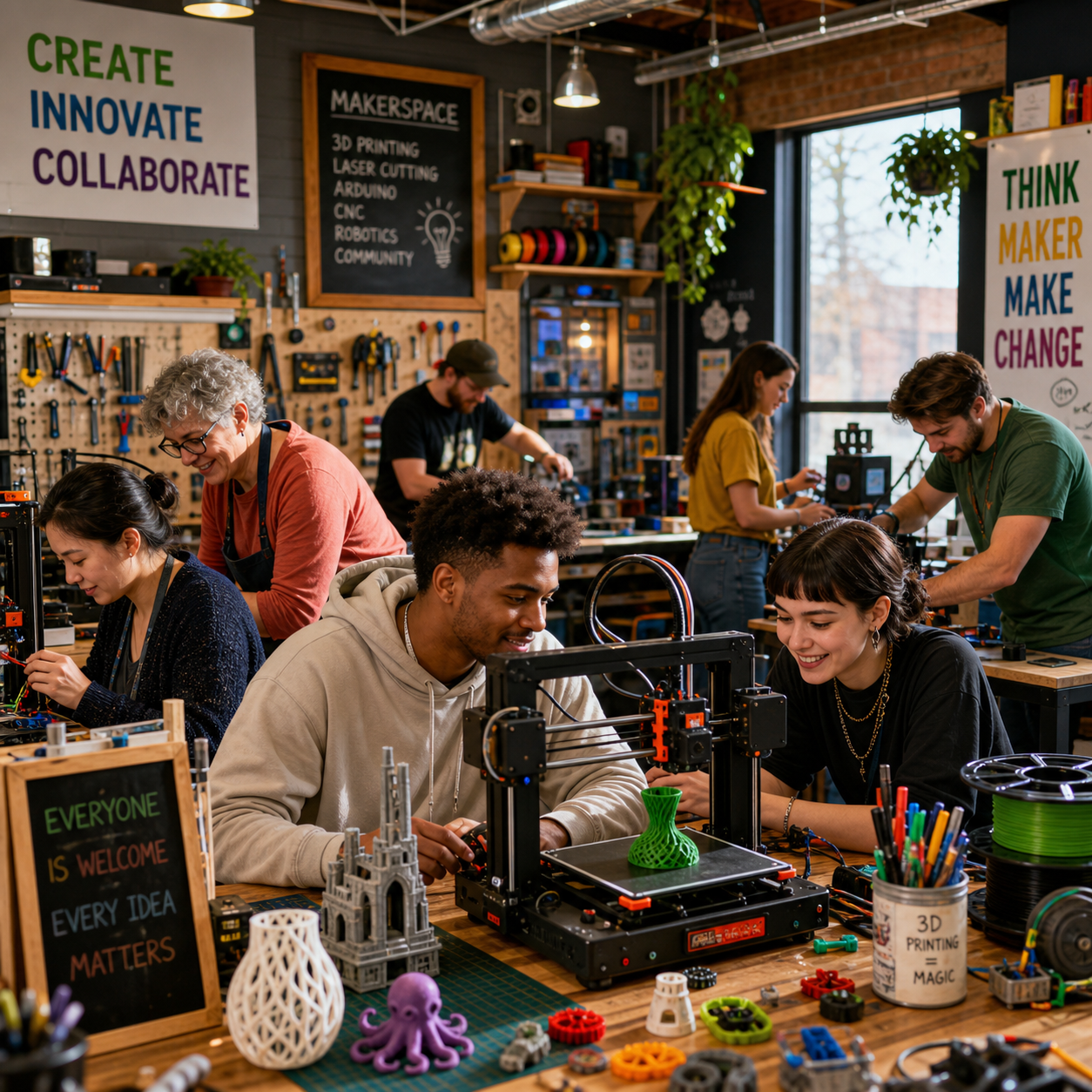
When a neighborhood loses power after a hurricane, when a rural clinic runs out of a critical medical component, when a teenager in an underfunded school district has never touched a design tool — these aren't abstract policy problems. They're gaps in community resilience. And increasingly, 3D printing education is one of the most practical tools available to close them.
What Does "Community Resilience" Actually Mean in a Tech Context?
Community resilience is a community's capacity to anticipate disruption, absorb stress, and rebuild — ideally stronger than before. In a technology context, that capacity is directly tied to whether people have the skills to solve problems locally, without waiting for outside help.
Tech education, particularly hands-on fabrication training, contributes to resilience in three measurable ways: it builds local problem-solving capacity, it reduces dependency on distant supply chains, and it creates a culture where people see themselves as makers rather than passive consumers of solutions.
3D printing sits at the intersection of all three. A community that understands additive manufacturing can prototype a replacement part, adapt an existing design for a local need, or train the next person in a matter of weeks. That's not a small thing. That's the foundation of self-sufficiency.
Why 3D Printing Is a Uniquely Powerful Tool for Social Innovation
3D printing accelerates social innovation because it collapses the distance between an idea and a physical object — without requiring a factory, a large budget, or specialized infrastructure.
Traditional manufacturing demands scale. You need thousands of units to justify tooling costs. Additive manufacturing flips that logic entirely: printing one custom item costs nearly the same as printing ten. This makes it ideal for communities that need small quantities of highly specific solutions — a custom grip for someone with a hand disability, a replacement bracket for a water pump, a teaching model for a school that can't afford commercial lab equipment.
The cost barrier, while real, has dropped dramatically. Entry-level desktop printers capable of producing functional parts now start under $300, and filament costs roughly $20–$30 per kilogram. For community organizations operating on tight budgets, that's a workable investment — especially when shared across a makerspace or fabrication lab.
Open-source design communities like Thingiverse and Printables host hundreds of thousands of freely downloadable files, meaning communities don't need to design from scratch. They can adapt, remix, and localize existing designs. That's grassroots technology access in its most practical form.
From Classroom to Community: How 3D Printing Education Takes Root
The most effective 3D printing education programs don't start with machines — they start with problems people already care about solving.
Schools are the most obvious entry point, particularly through STEAM education frameworks that integrate science, technology, engineering, art, and math around project-based learning. When students design a solution to a real local challenge — improving a playground, creating signage for a neighborhood garden, building models for a history lesson — the printer becomes a means to an end rather than the point itself.
But schools aren't the only pathway. Libraries have emerged as powerful hosts for community fabrication labs, partly because they already serve as neutral, accessible public spaces. Community centers, nonprofit makerspaces, and even faith-based organizations have launched programs that reach adults, seniors, and people who would never walk into a school setting.
The ripple effect matters here. When one person in a household or neighborhood learns to design and print, they become an informal teacher. Skills spread laterally through social networks in ways that formal curricula can't fully replicate. Programs that build in peer-teaching components — where participants are expected to train someone else — tend to see faster community adoption than those that treat learning as purely individual.
Real Problems, Local Solutions — What Communities Are Making
Once people have basic digital fabrication skills, the range of problems they tackle is wider than most outsiders expect.
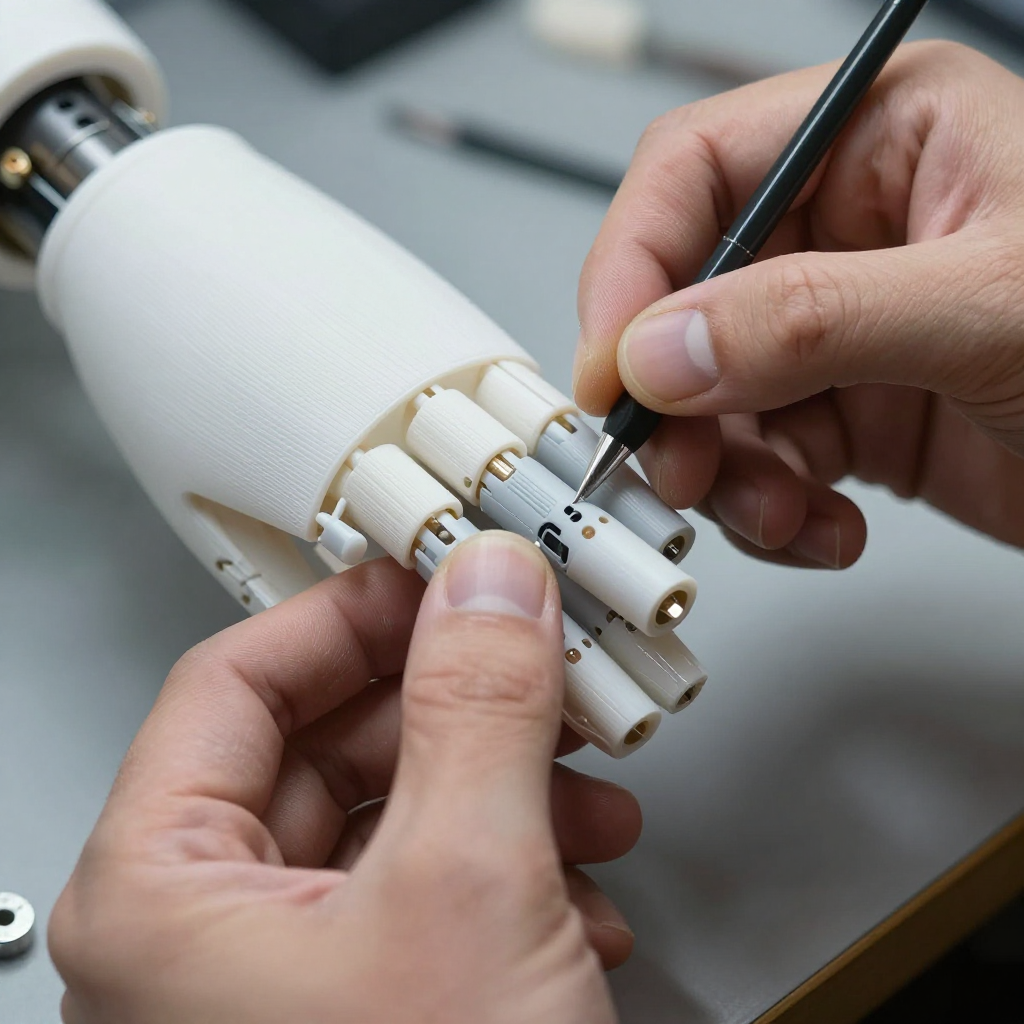
Prosthetics and assistive devices are among the most documented applications. The e-NABLE community has distributed thousands of open-source 3D printed hand and arm devices globally, many assembled by volunteers with consumer-grade printers. The cost of a printed functional hand device runs roughly $50–$150, compared to thousands for a conventional prosthetic.
Disaster response is another area where local fabrication capacity proves its value. After supply chain disruptions — whether from storms, conflict, or pandemics — communities with printing infrastructure have produced replacement parts for medical equipment, water filtration components, and emergency shelter hardware. The ability to manufacture locally, on demand, is a genuine resilience asset.
Beyond crisis scenarios, communities are printing everyday practical items: replacement parts for appliances that would otherwise be discarded, custom tools for small-scale agriculture, educational models, and cultural artifacts that preserve local heritage. These aren't dramatic stories, but they represent a quiet shift in who controls the means of local production.
Building Inclusive Programs That Reach Everyone
Inclusive 3D printing education requires deliberate design, not just good intentions. The barriers to access are real and varied — and ignoring them produces programs that serve the already-advantaged.
Cost is the most obvious barrier, but it's often the most solvable. Shared equipment models, grant funding, and partnerships with libraries or schools can distribute hardware costs across a community. Consumable costs (filament, maintenance) are the stickier problem for long-term sustainability.
Language and literacy barriers require translated materials, multilingual instruction, and visual-first curricula that don't assume strong English proficiency or reading fluency. Programs serving immigrant communities or indigenous populations have found success by co-designing curriculum with community members rather than importing external models wholesale.
Geographic isolation is a real constraint for rural communities. Mobile fabrication labs — essentially vans or trailers equipped with printers and laptops — have been deployed in several regions to bring hands-on digital fabrication skills to areas without permanent infrastructure. It's not a perfect solution, but it's a practical one.
Disability access deserves attention both as a design principle and an irony worth naming: communities that most benefit from assistive device printing are sometimes the ones least able to access the training to produce them. Programs that actively recruit and accommodate participants with disabilities tend to generate more relevant, better-designed solutions.
The Long-Term Payoff — Skills, Livelihoods, and Stronger Social Fabric
The long-term value of 3D printing education extends well beyond what any single program can measure in a grant cycle.
Workforce development is the most tangible near-term outcome. Additive manufacturing skills are increasingly sought across industries — aerospace, healthcare, automotive, consumer goods — and workers who understand design-to-print workflows have a genuine labor market advantage. For communities with high unemployment or underemployment, that's meaningful economic mobility.
Entrepreneurship is a less-discussed but equally important pathway. Small-batch manufacturing, custom product businesses, and local repair services are all viable micro-enterprises for people with fabrication skills and a printer. The startup cost is low enough that this isn't a theoretical possibility — it's happening in communities across the US, Kenya, India, and Brazil.
The deeper payoff is cultural. Communities that develop a practice of local problem-solving — where the default response to a broken thing or an unmet need is "can we make that?" rather than "who do we call?" — develop a fundamentally different relationship with their own agency. That shift in orientation is hard to quantify, but it's the core of what social innovation actually looks like at the neighborhood level.
How to Start or Support a Community 3D Printing Initiative
Starting a community 3D printing program is more achievable than most people assume. The barriers are real but manageable with the right sequencing.
Start with a problem, not a printer. Before acquiring hardware, spend time with community members identifying specific, local needs that fabrication could address. Programs built around genuine community demand outlast those built around technology enthusiasm.
- Partner with existing infrastructure: libraries, schools, community centers, and maker organizations often have space and some equipment already
- Apply for grants through local community foundations, state workforce development agencies, or national STEM education funders
- Connect with open-source design communities to access free, adaptable files rather than building a design library from scratch
- Build peer-teaching into the program structure from day one — participants who teach others retain skills longer and expand program reach without additional cost
- Document outcomes honestly: what got made, who participated, what changed — this builds the evidence base for future funding and replication
For organizations looking to support rather than lead, funding fabrication lab equipment for an existing community organization is often more impactful than launching a new program. Capacity already exists in many communities — it just needs resources to grow.
Frequently Asked Questions
What age groups benefit most from community 3D printing education programs?
Programs have shown strong results across a wide age range — from elementary students (ages 8+) through adults and seniors. Middle and high school students tend to engage most deeply with design challenges, while adult learners often show the strongest motivation when programs connect directly to employment or practical community needs.
How much does it cost to set up a basic 3D printing lab for a community space?
A functional starter setup — two to three desktop printers, basic software, and a filament supply — can be established for roughly $1,000–$2,500. More robust labs with multiple machines, laptops, and design workstations typically run $5,000–$15,000. Ongoing costs (filament, maintenance, facilitation) are the more significant long-term budget consideration.
Do participants need prior tech or design experience to join these programs?
No prior experience is required. Most effective community programs are designed for complete beginners and use visual, project-based approaches that build skills incrementally. Free tools like Tinkercad are specifically designed for first-time 3D designers and have very shallow learning curves.
How does 3D printing education differ from traditional vocational training?
Traditional vocational training typically prepares people for specific job roles within existing industries. 3D printing education, at its best, develops broader creative problem-solving capacity — the ability to identify a need, design a solution, and produce it. That's a more transferable and entrepreneurially oriented skill set, though it can also feed directly into workforce pathways in manufacturing and design.
Can small or rural communities realistically implement 3D printing initiatives?
Yes, though the model may look different than urban programs. Mobile labs, regional partnerships, and library-based programs have all proven viable in rural contexts. The key is anchoring the program to real local needs — agricultural tools, infrastructure repair parts, educational resources — rather than importing an urban program template unchanged.