The Intersection of Traditional Craft and Modern Technology in Haiti
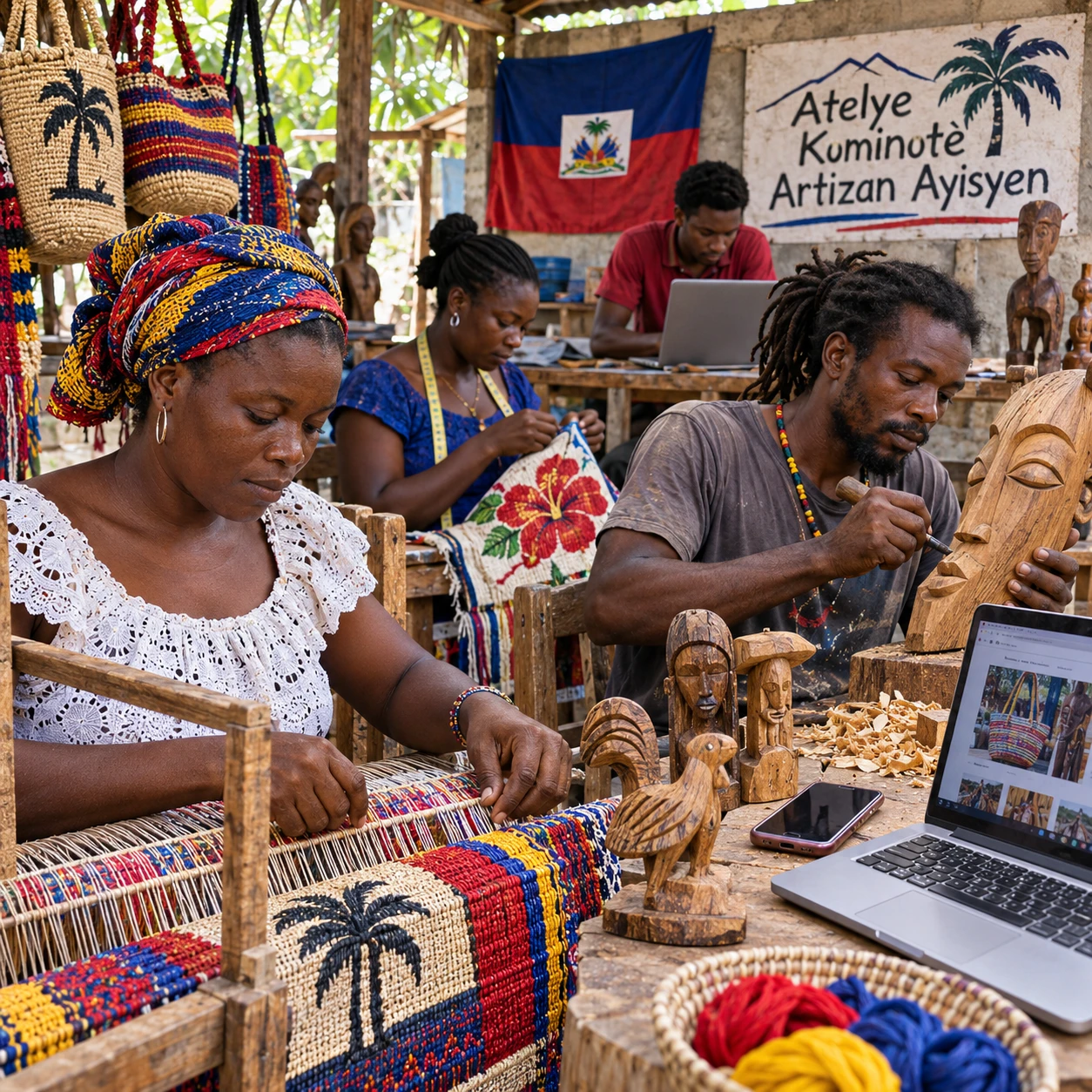
In Haiti, traditional craftsmanship carries knowledge through materials, techniques, stories, and relationships. Digital tools can help Haitian artisans document that knowledge, develop designs, and connect with wider audiences, provided communities shape how the technology is used.
This intersection is not a simple choice between heritage and change. It is a practical question of who controls the tools, how value is shared, and whether innovation strengthens the work artisans already want to do.
Haiti’s Craft Traditions as Living Knowledge
Haitian craft traditions are living forms of knowledge, shaped by makers, communities, materials, and changing circumstances. Textile arts, weaving, wood carving, and other practices express cultural identity while supporting skill-sharing and creative livelihoods.
There is no single Haitian craft tradition. Techniques and meanings vary across regions, families, workshops, and generations. A woven pattern may reflect a maker’s choices and local influences; a carved object may carry practical, decorative, or spiritual significance. Treating these practices as fixed symbols can flatten the differences that make them meaningful.
Traditional craftsmanship is expertise. It includes material judgment, timing, hand skills, and an understanding of how a piece will be used. Some of that knowledge is taught directly; some is learned by watching, practicing, and correcting mistakes. Digital records can help preserve parts of this process, but they cannot replace the experience of making.
For social innovation work, the starting point is to recognize artisans as knowledge-holders and decision-makers. Their priorities may include earning steady income, keeping a technique in use, training younger makers, or adapting products for local needs. A project that supports those goals will look different from one designed only to attract outside buyers.
Where Technology Meets the Workshop
Accessible digital tools can support Haitian artisans with design, documentation, production planning, and communication. The most useful technology often solves a specific problem rather than asking makers to change their whole process.
A phone camera can record weaving steps, capture variations in a carving, or help a maker review a prototype. Shared digital folders can organize photographs, measurements, and notes, if artisans control who can access them. Simple design software may help test color combinations or prepare a pattern for a particular product, while leaving the final craft decisions in the maker’s hands.
Technology can also help workshops coordinate orders and materials. A spreadsheet or messaging group may track deadlines, costs, and customer changes more reliably than scattered paper notes. These tools have limits: they need electricity, connectivity, time to learn, and a workflow that people actually find useful. A complicated system can add work rather than reduce it.
Begin with the task, then choose the tool. If the problem is losing product photographs, a shared phone album may be enough. If several makers need to coordinate deliveries, a basic order log could help. In either case, agree on who maintains the information and who may use it before collecting it.
Reaching New Audiences Without Losing Context
E-commerce and digital marketplaces can connect Haitian artisans with buyers beyond their immediate communities. Strong product pages combine clear information about materials, dimensions, care, price, and delivery with storytelling that artisans have chosen to share.
Online storytelling can provide context that a product photograph alone cannot. A maker might explain how a textile is produced, what makes a particular technique demanding, or how a design has changed over time. That story should come from the artisan or be approved by them. Sellers should avoid implying that all Haitian makers share the same methods or meanings.
Digital sales also bring practical requirements: dependable photographs, clear inventory records, packaging, payment options, shipping arrangements, and customer communication. A marketplace may offer visibility while charging fees or setting rules that are difficult for small workshops to meet. Direct sales can offer more control but require artisans or partners to handle more of the work themselves.
Context is part of the product experience. Buyers need enough information to make informed choices, and makers need control over how their work is represented. A thoughtful listing names the maker or workshop where appropriate, avoids unsupported cultural claims, and explains what buyers are paying for: skilled labor, materials, and the time involved.
Benefits and Tensions of Digital Adoption
Digital adoption can improve visibility, communication, and access to markets, but it also creates costs and risks. Outcomes depend on connectivity, training, platform terms, and whether artisans retain control over their designs and information.
Uneven access matters. Some makers may have reliable devices and internet; others may share a phone, face high data costs, or have limited time for training. Online orders can also create pressure to produce faster or in larger quantities than a workshop can sustain. More attention is not automatically more income, especially when platform fees, payment charges, packaging, and shipping reduce the amount artisans receive.
Intellectual property deserves careful attention. Posting a design online can make it easier for others to copy it, while photos and recorded techniques may circulate without permission. Legal protections vary by country and by type of work, so a digital archive or online store should not be treated as protection by itself. Artisans and partners can set clear terms for image use, attribution, licensing, and removal requests.
A common mistake is to measure success only in page views or orders. Those figures may miss whether makers set fair prices, retain creative control, or choose to continue the work. Another is introducing software before asking how a workshop currently operates. A short, paid trial with an agreed purpose can reveal whether a tool saves time or simply shifts administrative work onto artisans.
A Community-Led Path to Innovation
Community-led innovation begins with artisans defining the problem, the desired outcome, and the rules for collaboration. Partners can contribute technology, funding, or market access, but local makers should guide decisions that affect their work and cultural knowledge.
A useful approach is to move through four steps:
- Listen: Ask artisans what they want to preserve, change, or make easier. Do not assume the project needs an app or a sales platform.
- Co-design: Choose tools with the people who will use them. Test in the language, devices, and working conditions available locally.
- Agree on ownership: Set terms for designs, photographs, recordings, customer data, and revenue before publishing or sharing materials.
- Review and adapt: Check whether the tool supports the agreed goal. Keep it, change it, or stop using it if it creates more burden than value.
Ethical collaboration also means paying people for their time and expertise, including consultation and training. It means sharing decisions rather than asking artisans to endorse a finished plan. Success measures should reflect community priorities: perhaps a technique remains in practice, younger makers gain paid learning opportunities, or a workshop improves its ability to negotiate prices.
These principles do not remove every difficulty. Partners may have different timelines, and community decisions can take longer than a grant cycle allows. That is a real trade-off. Rushing can produce a polished launch that does not fit local needs; making room for discussion can build a more durable foundation.
What a More Connected Future Could Look Like
A more connected future for Haitian craft would use technology to support cultural continuity and livelihoods on terms set by artisans. It could combine hands-on teaching, carefully managed digital records, and online communication without treating any one tool as a solution for every community.
For example, a weaving group might choose to record selected techniques for its own training use, while keeping other knowledge within the community. The same group could create a small online catalog, update it when capacity allows, and decide how orders are distributed. Another workshop might prioritize a digital archive or local learning program over selling online. Both are forms of innovation if they address a community-defined need.
The key is to keep asking who benefits, who carries the work, and who has the authority to say no. When Haitian artisans shape those answers, digital tools can extend the reach of traditional craftsmanship without turning culture into a trend or making technology the center of the story. The result is not a single model to copy, but a range of locally grounded choices that help craft knowledge remain active and valued.